

Where Practice and Healing Meet
Consistent, dedicated Tai Chi practice gradually changes what we are able to feel. As movement slows and attention deepens, the body begins to reveal the habits hidden beneath ordinary motion: a shoulder that never fully releases, a hip that resists turning, a breath held too high, or a foot that has lost its relationship with the ground.
These discoveries are not distractions from the practice. Very often, they are where the real practice begins.
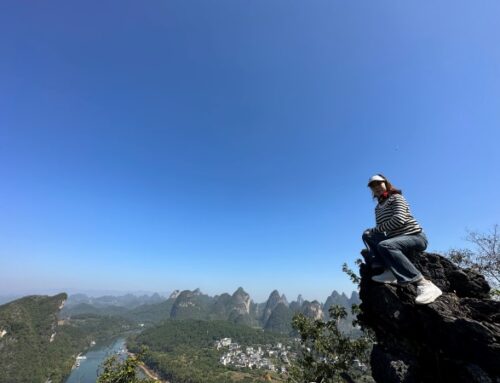
At Long Tou Shan, this process of embodied awareness and reconnection to self unfolds in the stillness of our beautiful hillside school, overlooking the Li River and the surrounding karst mountains. We are a traditional Tai Chi school rather than a retreat with fixed dates or a prescribed program. Students come for the time available to them, whether that is a week, a month, or longer, and enter the daily rhythm of instruction, independent practice, shared meals, rest, and mountain life. This flexibility allows each student to adapt their study to their own needs, experience, and pace of learning.
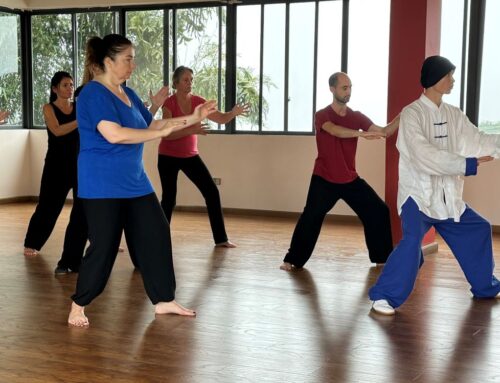
Master Da Zhu regularly brings students back to the base: the organization of the body from the ground upward. Before the arms can become light, the feet must become clear. Before movement can travel through the body, the legs, hips, spine, and shoulders must learn to cooperate. Before a student can truly relax, they must first recognize the effort they are unconsciously using.
This can be more challenging than it sounds. A student may believe their shoulders are relaxed while the muscles remain lifted. The knees may bend without the hips releasing. The body may reproduce the outer shape of a posture while remaining internally disconnected. Slow practice exposes these patterns, and regular training gradually brings them into awareness. Master Da Zhu patiently guides students, gradually building up the structure, helping them feel the connection of strength between the upper and lower body, thereby allowing the muscles and joints throughout the body to reach a state of relaxation.
The process can also be physically demanding. Students may experience tired legs, stiffness in the hips or back, or tension through the shoulders and neck. Travel, changes in climate, unfamiliar routines, mountain walking, and increased activity can also affect how the body feels during a stay.
Supporting the Foundations of Tai Chi
The primary purpose of coming to our school is to train under the guidance of Master Da Zhu, learning foundational exercises, internal principles, and the mechanics that allow the body to move as one connected whole. Yet life here often feels deeply restorative. The landscape is quiet, meals are prepared each day, and the rhythm of school life gives students space to focus on their practice while being genuinely cared for. They arrive expecting to study at a traditional Tai Chi school and often discover that the peaceful surroundings and attentive care offer many of the restorative qualities of a retreat.
An important part of that support is Master Nong, our healer in residence. Through traditional treatments, he works with the same body that students are training each day: the feet learning to root, the legs developing stability, the hips and spine creating connection, the shoulders learning to release, and the nervous system becoming quiet enough to listen.

His work does not replace Tai Chi, nor is it presented as a shortcut to progress. Incorporating his treatments into a stay can help create the conditions in which practice becomes more comfortable, perceptive, and deeply embodied. By working with areas of fatigue, tension, coldness, heaviness, or restriction, he can help the body rest and recover between periods of training. As unnecessary holding begins to soften, students may return to class with a clearer sense of their structure and a greater ability to understand and embody the teacher’s corrections.
Long Tou Shan’s Traditional Treatments
Long Tou Shan offers acupressure massage, acupuncture, moxibustion, herbal steam baths, full-body therapeutic massage, and cupping. Each treatment supports the body in a different way and is offered according to the needs of the individual student.
Detailed acupressure is especially relevant to Tai Chi practice because it can bring attention to areas of habitual tension. Tightness in the lower back may be connected to restricted movement in the hips. Tension in the shoulders may affect the breath. Instability in the knees may be influenced by the way weight travels through the feet and legs. Acupressure can make these relationships more tangible, helping students recognize patterns that might otherwise remain hidden.
Acupuncture is one of the main therapies within the scope of Traditional Chinese Medicine (TCM). A typical session starts with a diagnosis of the tongue and pulse. Based on the results, an individual treatment plan is made and will include the placement of needles at specific sites on the body. As with all therapies within TCM, the goal is to bring harmony to the body by balancing the energy of the body. Acupuncture is often combined with moxibustion and cupping therapies.

Moxibustion is a traditional heat therapy that generally uses dried mugwort to warm particular areas of the body. The core benefits of moxibustion include dispelling cold, warming the meridians, promoting qi flow and unblocking collaterals, and improving blood circulation. It may be especially supportive when the body feels cold, tired, contracted, or slow to release. Rather than forcing the body to open, the treatment provides steady warmth and allows softening to happen gradually. This reflects an important principle of Tai Chi: change does not always come through greater effort.

Our herbal steam baths are prepared with approximately 50 wild-picked Chinese medicinal herbs according to the ancestral secret formula of the Miao ethnic minority. The combination of warmth, moisture, fragrance, and stillness offers the body a complete change of pace after training, walking, or travel. Muscles can soften, the breath may deepen, and the nervous system is given time to settle. The locally gathered herbs also connect the treatment to the landscape and healing traditions of the region.

Full-body therapeutic massage supports recovery from standing practice, form training, mountain walking, and the unfamiliar demands of learning to move differently. It can help the legs, hips, back, shoulders, and neck release while giving the body space to integrate new patterns of alignment and coordination.
Cupping is a Traditional Chinese Medicine external therapy that enhances immunity, promotes beauty and skin health, aids in weight loss, alleviates pain, improves blood circulation, unblocks meridians, relieves muscle fatigue, and dispels cold and dampness. It uses suction on the surface of the skin and is often applied to areas that feel heavy, tight, or difficult to release, particularly around the back and shoulders. Temporary circular marks may remain after treatment and generally fade over time.
A Wholesome Approach for Practice and Recovery
One of the benefits of having a healer in residence is that treatment remains within the natural rhythm of school life. Students do not need to travel into town or interrupt the quiet of their stay. They can train, eat, rest, receive care, and then return to their room or spend time in the surrounding landscape.
This continuity is part of what makes Long Tou Shan distinctive. Practice, recovery, nourishing meals, rest, and time in nature are not treated as unrelated parts of the day. Together, they create an environment in which students can devote themselves more fully to learning.
Authentic Tai Chi is not only about learning movements. It is about changing the way we stand, breathe, move, and inhabit the body. Master Nong’s treatments support that process by giving the body time to soften, recover, and become more receptive to the practice.





Leave A Comment